The beauty and the horror of opacity--on I Saw the TV Glow

I. “When you think back on watching The Pink Opaque, how do you remember it?”
No one ever talks right away.
I’ve watched I Saw the TV Glow thrice in theaters and screened it at home for friends multiple times, and every time, credits song “Another Season” by Frances Quinlan kicks off to absolute silence. I think my friend Lauryn bounced back fastest with a “That’s who that was!” after not being able to place Justice Smith all film. Most come back around by “Executive Producer Emma Stone, huh?”, or in extreme cases, seeing Fred Durst's name in the credits hits like smelling salts. And while the ending’s abruptness wrongfoots the audience, the silence comes from how unmooring TV Glow’s final act is; how following a borderline hallucinogenic run through a rock club, a planetarium, 16 years, and a Dave & Busters-esque Fun Zone from Hell, you finally think there’s a North Star, and instead you have Smith stammering a series of “I’m sorry”s through impossibly chapped lips. Watching it alone in the theater, I can’t tell you how long it was until I spoke to someone beyond a cursory “See ya” to the theater employees or hi to a bus driver. It fucked me up!
I’m not alone in that. In the 2 years since release, I Saw the TV Glow has already earned a reputation as an “Oh my God, I was a mess afterward” cult classic. While not widely seen ($5.4 mill worldwide, baby!), it is closely held. On top of the gender stuff that has come to define it, TV Glow intimately understands the allure of being such a fan of something, that it becomes your whole life (the whole movie puts one hell of a spin on this, but that’s a topic for later), and on a level, it’s fitting that life imitates art. At least it did for me; see: the name of the newsletter.
But then, like, how could it not? While Justice Smith’s character Owen and I are slightly off in age, we’re frighteningly similar as quiet biracial boys in the 90s and 00s who orbited our moms, obsessed over media that was labeled “for girls,” and used that to not ask as many questions about the self as we probably should. Then there’s the physical similarity; my pre-transition, 20-something look could have been described as “bulkier Justice Smith meets less swaggy mid-10s Donald Glover.” If Owen grew an “I hate my face shape” beard at 22, we could have been twins. Even though TV Glow came out by the time I was already identifying as nonbinary and a year into HRT, never had a movie hit me where I lived like this. My viewing pulled matters to the fore that I’d only given a light touch, taking me back over the familiar and giving me time to pause over where to go next. It felt a little out of body, to be honest.
II. “It’s really scary. And the mythology is way too complicated for most kids.”
I assume anyone who’s got to the second subheading of a piece about a movie has already seen said movie (or tabbed over to Wikipedia by now), but for the sake of completeness: trans nonbinary director Jane Schoenbrun’s 2024 film I Saw the TV Glow is about a young man named Owen who lives in the suburbs of New Jersey in the 90s. One night, he comes across a commercial for a Buffy the Vampire Slayer/The Secret World of Alex Mack-esque TV show called The Pink Opaque and is immediately enraptured. He meets an aloof, slightly older girl (well, girl-ish) named Maddie and the two connect over the show and their outsider status. Two years later, Maddie runs away, but Owen refuses to join. That same night, The Pink Opaque goes off the air after airing its 5th season finale cliffhanger. We jump six years forward to Owen working a dead-end movie theater job and living a sullen, suffocating existence, only perking up when Maddie comes back.
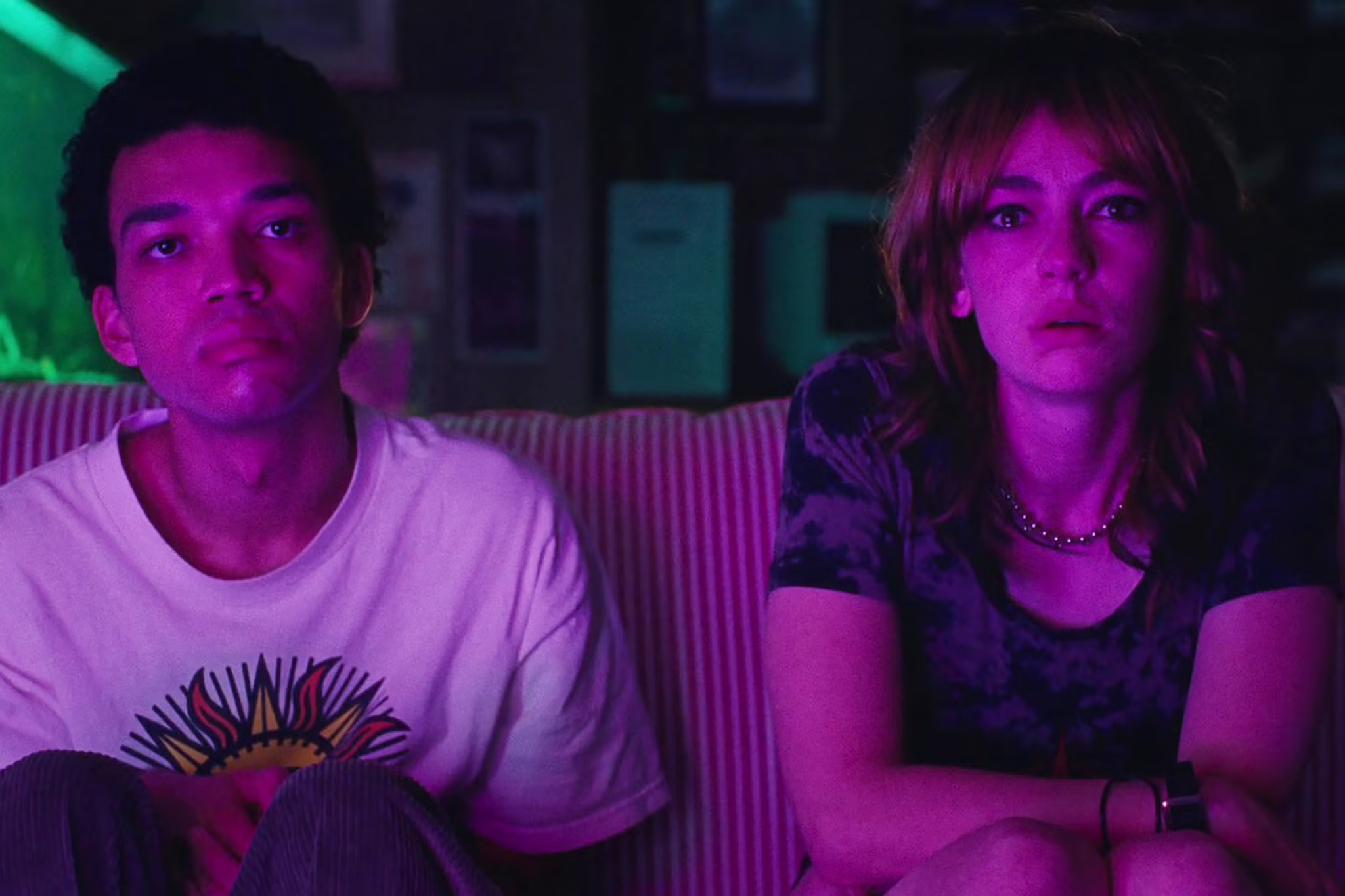
She reveals that the pair of them are not Maddie and Owen, but Tara and Isabel: the lead protagonists of The Pink Opaque. Not only that, but Maddie says that the show’s world is real life, and that reality as they know it is The Midnight Realm, a nightmare reality show’s big bad, Mr. Melancholy, trapped them in. Maddie/Tara says that she escaped by burying herself alive, and that Owen/Isabel needs to do the same, because, as seen in the season 5 finale, Isabel is dying. For a second time, Owen can’t do it, and runs away on his way with Maddie to the burial site. He never sees her again. He later starts a family. We never see them.
The movie picks up again sixteen years later. Owen, now a wheezing shell of a person, works at the aforementioned Dave & Busters from Hell. Following an outburst and an asthma attack, he opens his chest with a box cutter to reveal his chest is made of glowing static. He’s elated. But, instead of the expected triumph, we then cut to him shambling across the game center, offering a flurry of apologies to customers for his outburst. They ignore him; cut to black, roll the credits.
(Sidenote: lost in TV Glow’s reputation as the “there is still time <3” movie is how well it works on a plot level. Like Everything Everywhere All At Once getting reduced to “the laundry and taxes with you’ movie,” TV Glow is more than its winsome pull quote suggests, and bangs pretty hard just taken as a surreal, cautionary of age flick.)
III. “They bury her…alive. And then, it just ended. Forever.”
The first time I showed TV Glow to some friends of mine at my house, I intro’d it with “Yeah, it’s billed as a horror movie, but it’s not ~really a horror movie,” and then an hour-twenty later, all of us were climbing up the walls in sheer distress. I still haven’t lived that shit down. But in my defense! Like 80% of the movie is more of a cautionary, teenage surreal story than anything else. Constantly unnerving, yes. Atmospheric as hell, you bet. But despite a jumpscare or two, the movie errs toward decadent colors and painterly shots for the majority of its runtime; visuals that are more daydream than nightmare.
Then, Owen rewatches “The Final Episode,” and the answer to “Is I Saw the TV Glow a horror movie?” unambiguously becomes “YES. FUCK.” The sequence dispenses with the 90s camp of the previous The Pink Opaque clips for something far more fucking sinister, including recontextualizing the movie’s earliest, sweetest moments with Owen as actually a near-death Isabel being sent to The Midnight Realm, to say nothing of ending with a 15 year old girl being buried alive with her heart cut out and coughing up blue goo juice she was forcefed, and the horror doesn’t end just because the episode does.
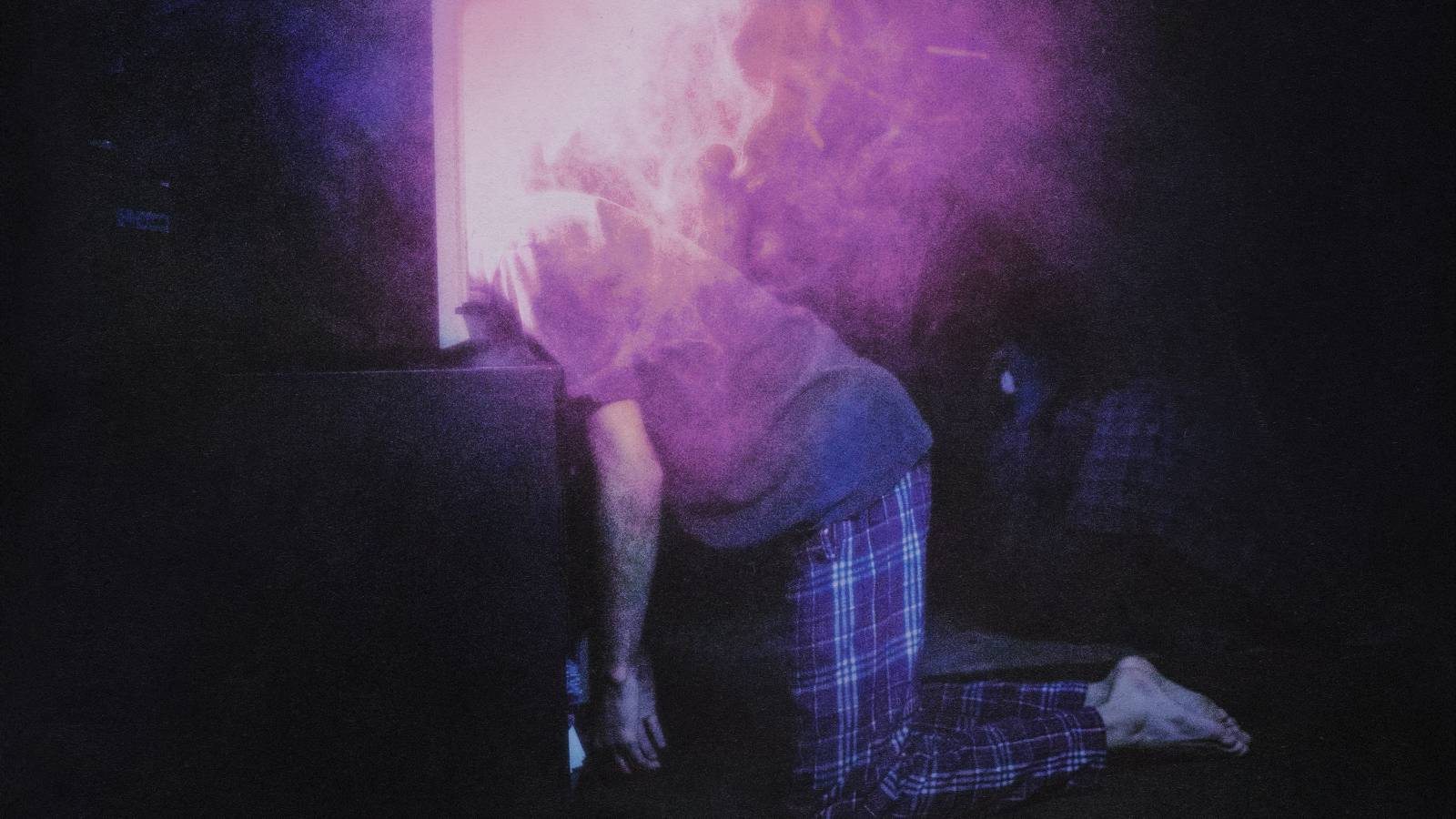
We come in short order to Jack Haven’s monologue in the planetarium, which may be my favorite scene of the decade. There’s not a good version of it on YouTube, and me trying to describe it wouldn’t do it justice, but this is where the movie straight up levitates. The monologue is a feat of screenwriting for how it weaves together character narrative, the language of self-discovery, and plot revelation all in one unbroken tether, and hits so much harder for the way Jack Haven as Maddie/Tara shifts from adrift to determined to abject horror to gentle plea, all while Alex G’s score subtly escalates the tension and fear at play. This, to me, is the most horrifying aspect of TV Glow: what if that sinking feeling that life isn’t what it’s supposed to be, that it’s passing you too quickly and too fatally and too wrong–what if that feeling was right, and what if the way through required total and utter surrender? And what if you couldn’t go through with it?
For everything upsetting the movie's thrown at you until now (I refer again to “15 year old girl dying in an open grave”), nothing in TV Glow is as heartrending as a despondent, hollow-eyed Owen telling the camera “I have a family of my own now. I love them more than anything.” It’s the saddest fucking thing. It’s the knowledge that you had your chance, chose not to take it, and now you’re trying to fill the hollowness in you with even emptier words. But it’s all he has to get through the days until they blur into weeks, months, and then sixteen years.
TV Glow’s final scene shows Owen at long last examining his (literal) inner self and the beautiful TV static within. Yeule’s cover of “Anthems For a Seventeen Year Old Girl” kicks back in after not being seen since the title card, and Owen looks the happiest we’ve ever seen. More than that, he looks relieved. Then, rather than a triumphant end, the movie closes, as mentioned, with him furtively looking about the arcade, choking on “I’m sorry”s like gravedirt covering the casket of an unfulfilled life.
IV. “I found myself wondering, what if she was right? What if she had been telling the truth? What if I really was someone else, someone beautiful and powerful?”
I Saw the TV Glow often gets referred to as a movie with trans subtext, which is dumb, because the transness is fucking textual. Maddie tells Owen everything about actually being Tara and Isabel, respectively, and then in the final segment after refusing to go with Maddie, Owen has asthma attacks that result in him coughing up dirt and the blue Luna Juice, the two things that are killing Isabel. Therefore, the tension within TV Glow’s final stretch is very literally “In order to save himself, can Owen believe that he’s actually a woman?” And Hell, an accounting of all the ways in which the movie flags Owen as an egg would be exhaustive, but I think back to when Maddie asks him what he remembers about watching The Pink Opaque, and the movie cuts to a memory of Owen in Maddy’s basement trying on what was referred to earlier as “Isabel’s Magic Dress” while both of them smile, and I think about how many trans women I know (including myself) have had that “first dress” experience with someone.
(Sidenote number two: It’s worth mentioning Maddie/Tara’s own textual and extrapolated queerness. Maddie identifies as gay early on, fixates on the butch-y Tara, and has a much more androgynous look when she comes back in the 2006 segment. These factors, plus Jack Haven being nonbinary themself, have led to the fan headcanon that Maddie/Tara is nonbinary, as well. Yes, the theory that The Pink Opaque is made of a white enby and a light-skinned trans woman femme amuses Amaryl and I to no end.)
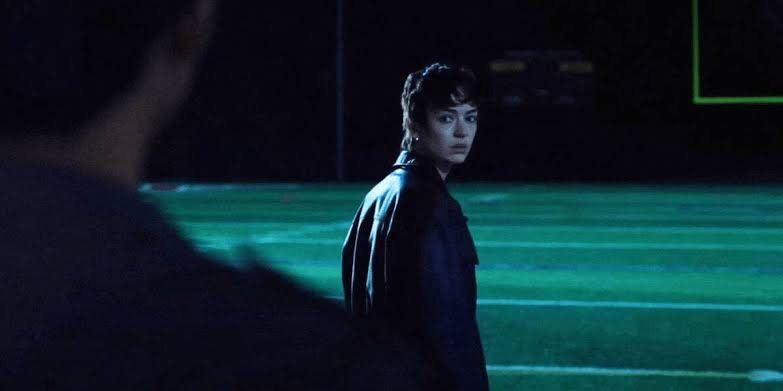
Here’s a funny thing: TV Glow never uses the words “transgender,” “queer,” or even “gay.” The closest it gets is the bleachers scene, where Maddie nervously tells Owen she likes girls before asking if he likes girls or boys. To me, this is one of the movie’s strengths. Part of that comes down to setting: TV Glow is a pre-internet/offline story, and you’d have to go way out of your way to encounter transness in the ‘burbs of the 1990s. Not without also, and this bleeds into reason number two why I think it’s better this way, considerably narrowing the movie’s scope. If you give Owen the T-word, TV Glow kinda becomes yet another coming out story about trying on wigs and makeup, finding healthcare, and surviving the day to day, instead of essentially being a grown up story out of Are You Afraid of the Dark?
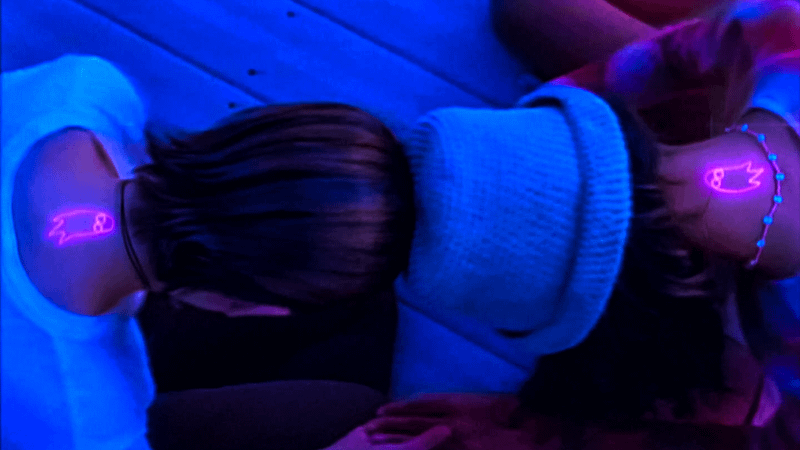
(Sidenote number three: TV Glow not looking you in the eyes and saying “this is the story of a transgender woman” lets it run free with a litany of trans and dysphoric “canon events,” such as: Owen furiously scrubbing off the Pink Opaque ghost logo Maddie draws for him, ala getting the last of that makeup off before mom or dad sees, the way Owen’s dad sneers “Isn’t that a show for girls?” when Owen asks about watching TPO, the fact that Owen cannot talk to another man while looking him in the eye, and so much of Justice Smith’s perpetually caving in body language, like he’s taking up more space than he should. These aren’t some “wink, wink” signifiers, but more Schoenbrun using a non-trans plot to tell a super trans story.)
But I’d argue I Saw the TV Glow resonates more, despite not using explicit language/concepts around transgender identities, is primarily because there is maybe no part of the transgender experience more personally hellish than working yourself from “I think there’s something wrong inside me that I cannot look at dead on,” to articulating “Could I be trans?” as a cogent thought. Because if you accept that you could be trans, then how could you contend with the answer being yes, and what you would have to do to live the life you want, and could you even do that?
Which is a daunting question to ask yourself! It’s why, in my experience at least, many people don’t. I think of how Owen tries to outrun his introspection next to hobbies I used to distract myself, my own disengagement with part of my pre-transition life (including years just like, missing from memory), or the way some folks will try to fill their own hollowness with distractions like too much booze, weed, sex, TV, workouts, or video games because as soon as you’re willing to ask yourself about the could, there’s no going back. It’s a line in the sand, or a sheer curtain dividing “here” from “there;” there’s no unseeing it, no wholly burying the urge to go past it. Because the scariest thing is that if you’re this frightened to ask the question, you already know the answer. That answer becomes an inevitability, no matter how hard you fake a life away from it. The static is in Owen the whole time. The other side is clear once you try.
V. “And I was me. I was finally me again. And it was the season six premiere.”
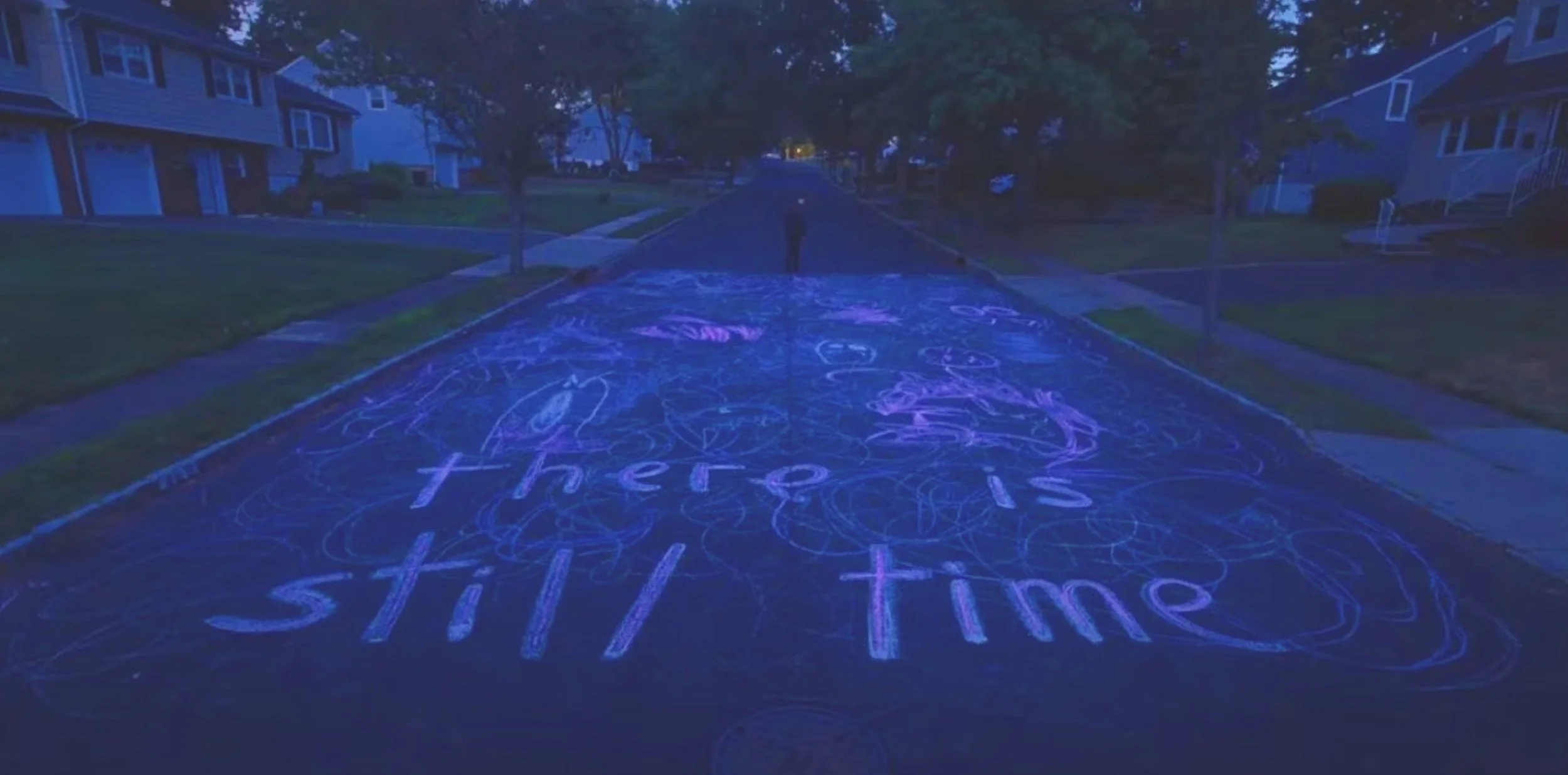
This is what I mean by the beauty and the horror of opacity. Like any threshold, opacity is proof of what lies beyond, but the scariest part is that you have to be the one to cross it. I think a lot about this quote from the movie: “I kept waiting for her [Maddie] to show back up to force me underground, but she never did.” Yes, someone else can light the way for you, and yes, someone else can encourage your journey, but nothing moves until you choose. This isn’t even just about transness; Owen's coda after running away on the football field feels appropriate for anyone with an inner truth that’s going unexamined, and his half-life afterward is haunting in how desperately you do not want to be him. That the movie ends the way it does just unsettles more because it’s not that Owen lost something as much as he never used what was always there. Instead of forcing him underground, Maddie leaves Owen with the sidewalk chalk message of “there is still time.” It’s one of the images from the movie, and often taken as an optimistic note, but I feel a pinch of dread embedded in there, too. The static, the glow, has always been in you, and there is still time for you to call on it. But no one lives forever; time will run out.
Like I said way back, no one’s ever talkative after this one. It’s part stunlock, but it’s also time to think. For me, TV Glow got me thinking how comfortable I was with my identity and what changes were to come. Being nonbinary and still holding my birth name filled some of the hollowness without satisfying, like there was always just a little more to go. Just a little more to the surface while there’s still time. And now I’m a trans woman named Audrey who does her injections on Wednesday mornings, and there’s nothing I’d give this up for. The movie didn’t tell me anything I didn’t already know, but it was and remains a place for me to let those thoughts unfurl.
I think that’s what makes it so “sticky” with some members of the trans community: it creates a contemplative, kind of emotionally liminal space in which you’re able to reflect on your gender and personhood in a way that I haven’t seen other movies do. The movie conveys an unspoken “I get it” through its language and performances that’s hard to not find disarming and inviting (there’s no better use of Justice Smith’s ~thing than playing the most sympathetic, dysphoria-addled person you’ve ever seen). That type of “see you through the screen” intimacy is why TV Glow’s fans are so ardent.
But if a story convinces you to live to your fullest, why wouldn’t you love it to the fullest? Sometimes, it’s worth being eager about what you love and the ways in which it’s inspired you to grow, especially when others are, too; I’ve made and strengthened multiple friendships at this point using a shared love of TV Glow as a launch pad. With this movie in particular, there’s plenty of “we like the same things” overlap, but too, there’s a layer of understanding how someone else aches without their needing to say so. The best of art lets us see each other like that. Schoenbrun’s art does that, first with the isolation and persona-building of We’re All Going to the World’s Fair, then with TV Glow, and soon with their new movie Teenage Sex and Death at Camp Miasma (beautiful title). I’m excited to see how they trade in TV static for slasher blood with Miasma, but whatever happens, there’s I Saw the TV Glow: you can join that strong and beautiful you on the other side of the screen. You just have to reach.